
Foundation repair in St. Louis costs $3,800–$12,500 for most structural fixes, from about $400 for a single crack injection. Metro clay expands when wet and shrinks hard in drought, cycling pressure against the full basements this region builds — which is why bowing walls and settlement cracks lead every call.
Below: the symptoms worth acting on, why Gateway-metro clay does this, and what each class of repair actually involves.
What a moving foundation looks like from the living room
Foundations rarely announce failure in the basement first. The house upstairs reports it:
- Stair-step cracks in brick or block — the masonry following a settling footing
- Doors and windows that stick every summer — frames racking as the clay cycles
- Drywall cracks radiating from corners of openings upstairs
- A horizontal crack or inward bulge partway up a basement wall — lateral clay pressure at work
- Floors sloping toward the middle or a gap opening under baseboards
- A chimney leaning away from the house — its own footing, its own settlement
One symptom is worth watching with a pencil mark and a date. Two or more — or anything horizontal in a basement wall — is worth a measured evaluation now, while the fix is a brace instead of a rebuild.
Between two rivers, the clay never sits still
The St. Louis region grew up on soils that hold grudges. Upland neighborhooods sit on shrink-swell clay that absorbs spring rain, expands with force against basement walls, then contracts in the dry heat of August and pulls support away from footings. The river valleys — Chesterfield Valley, the St. Charles bottoms — carry deep alluvial deposits that move dramatically with moisture. And the south county rides on karst limestone, where groundwater carves its own paths and surface soil can sink toward voids below.
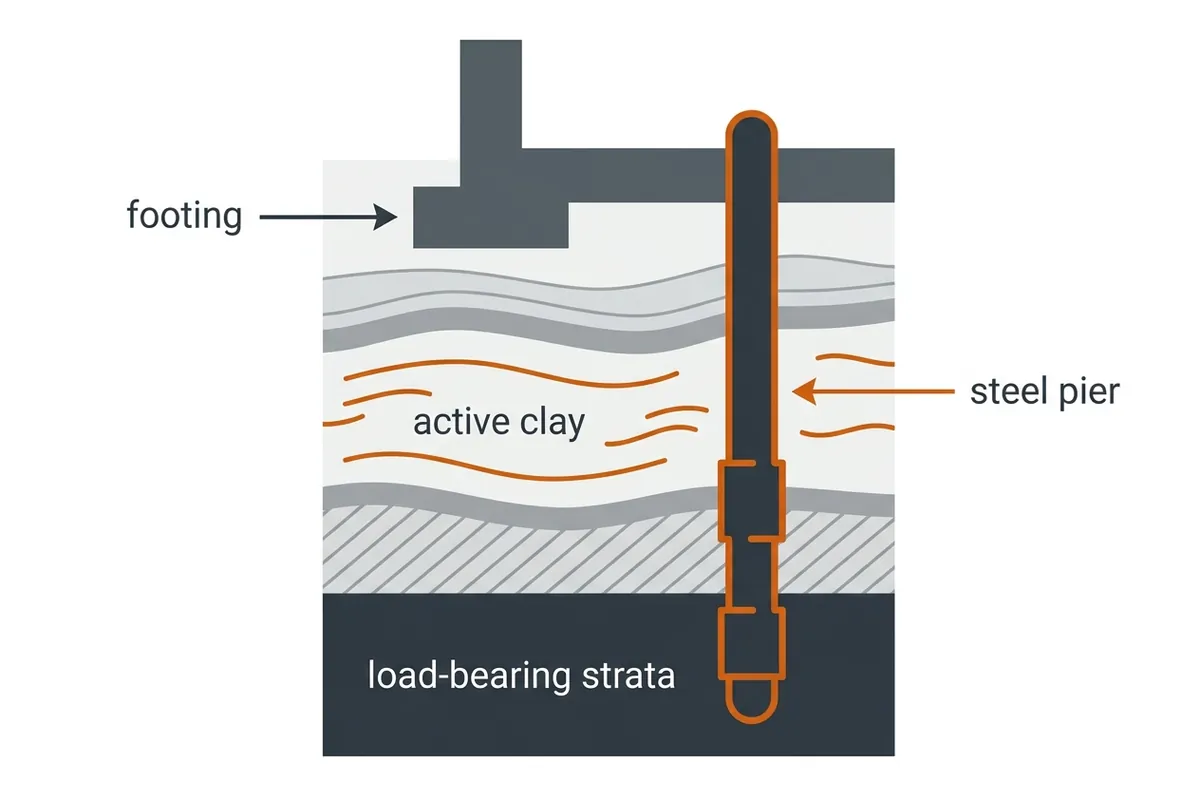
Add a Missouri winter's freeze-thaw cycling above the 30-inch frost line and the result is the same everywhere in the metro: the soil loads and unloads your foundation like a slow machine, season after season. Repairs that last are the ones that reach below the moving layer or restrain it — which is exactly how ours are engineered.
The four repairs that fix St. Louis houses
| Failure | The fix | Typical range |
|---|---|---|
| Settling footings, sinking corners | Steel piers driven to load-bearing strata | $4,000–$15,000+ |
| Bowing or leaning basement walls | Braces, anchors, or straightening | $2,500–$10,000 |
| Cracks leaking or widening | Injection and reinforcement | $400–$1,500 |
| Wet basement driving it all | Drainage, sump, and grading correction | $2,500–$8,000 |
Sunken driveways, patios, and garage slabs get their own fix — concrete leveling from $500 — and every structural quote starts from the same free evaluation with photos, crack measurements, and a floor-level survey.
The decisions behind the table run deeper on their own pages: how we separate clay settlement from karst movement, when helical piers beat push piers under brick or frame, how exterior and interior waterproofing compare for a full basement, what insurance actually covers in Missouri, and when an independent structural engineer is worth the fee.
How the evaluation works
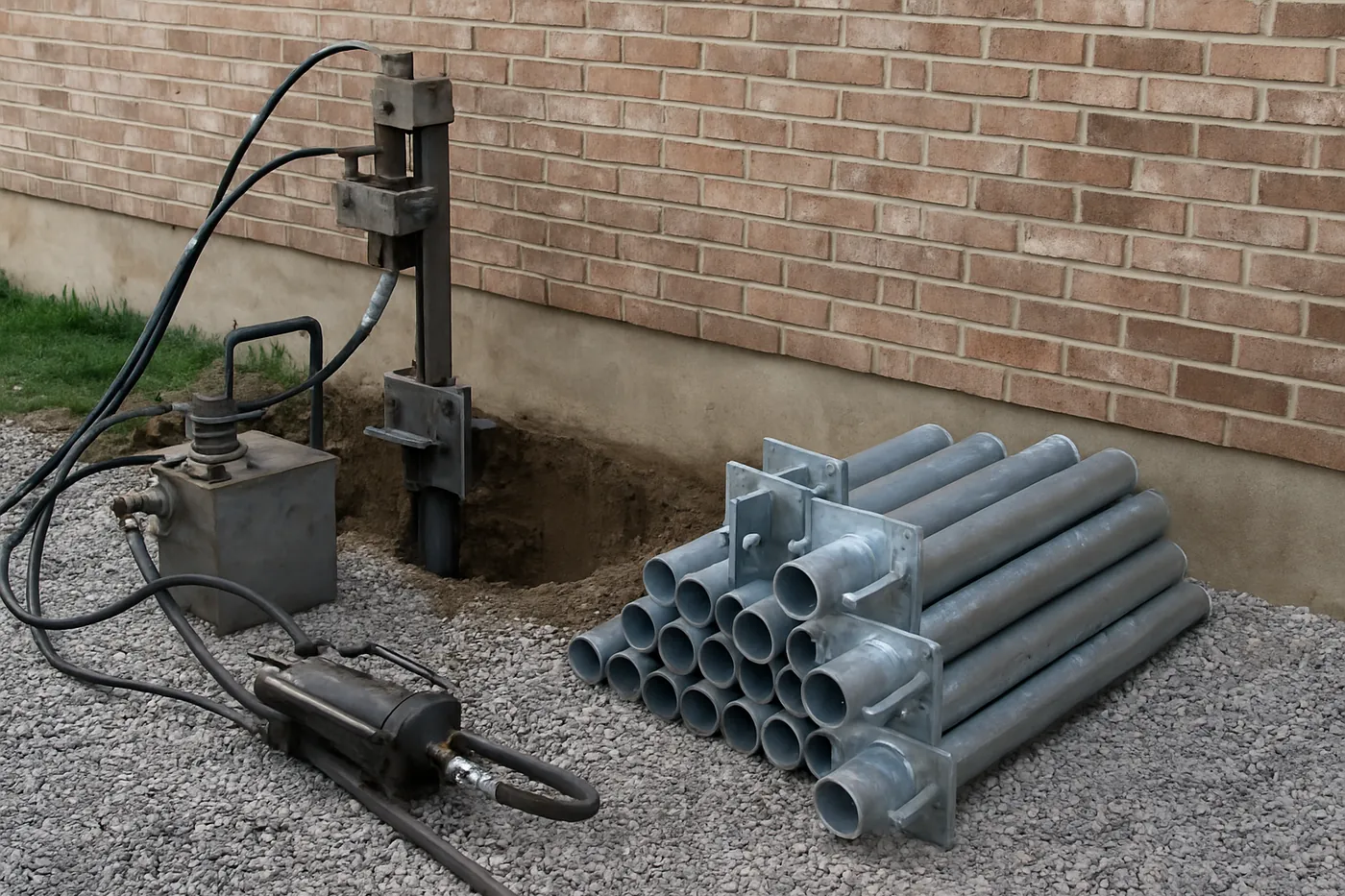
We walk the house inside and out: crack widths measured and photographed, floor levels shot with a laser, basement walls checked for deflection, grading and gutters traced for the water story. You get a written scope naming the cause, the fix, the price, and the timeline — and if the honest answer is “mark it and watch it,” that's what the report says. The evaluation is free either way.
Foundation repair questions St. Louis homeowners ask
How much does foundation repair cost in St. Louis?
Most structural repairs in Missouri run $3,800 to $12,500, with single-crack injections from about $400 and large multi-pier underpinning jobs above $15,000. The spread is set by pier count, wall condition, and access. Every number here follows a free measured evaluation. Our Foundation repair cost breakdown for St. Louis shows what drives each figure, line by line.
Why does St. Louis chew up foundations?
Shrink-swell clay between two rivers. Metro soils expand when saturated and contract hard in dry Augusts, cycling pressure against basement walls and footings year after year. South county adds karst limestone that moves water unpredictably, and the region's freeze-thaw winters pile on. Foundations here don't fail from one event — they fail from the cycle.
Are bowing basement walls really that common here?
They're the signature St. Louis failure. Most metro homes have full basements, which means tall walls holding back saturated clay. When that clay swells, lateral pressure bows block and even poured walls inward. Caught early, bracing or anchoring holds the line; ignored, walls need rebuilding.
Is a cracked foundation an emergency?
Depends on the crack. Hairline shrinkage cracks in poured concrete are common and often just need sealing against water. Horizontal cracks in a block wall, stair-step cracks widening past a quarter inch, or cracks paired with sticking doors deserve a structural look soon. The evaluation is free, so the answer costs you nothing.
How deep do repairs go?
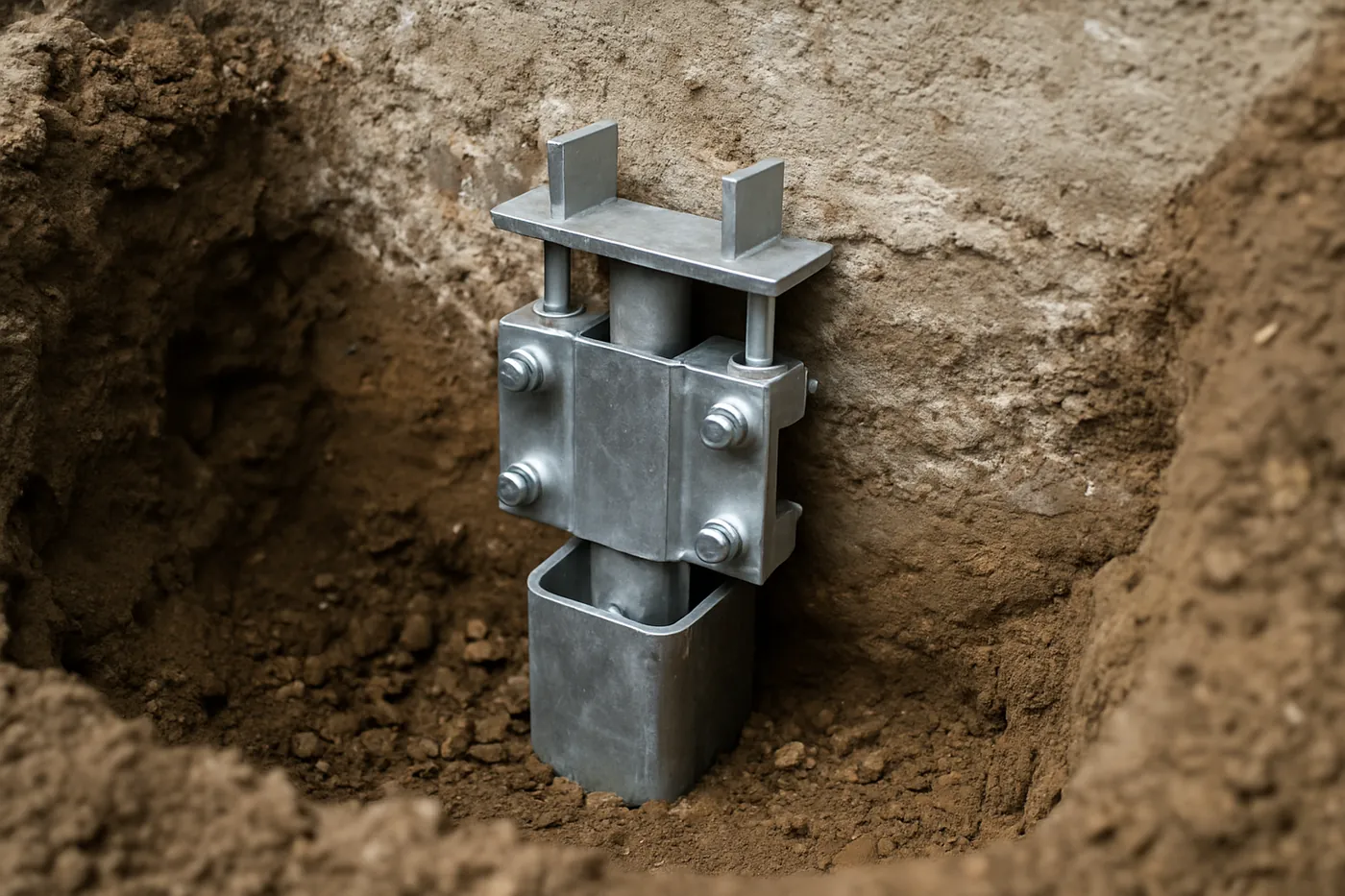
Below the trouble. Missouri code puts frost depth at 30 inches, but piers for settling foundations drive far past that — through the active clay layer to load-bearing strata, sometimes 20 feet or more. That's the point: the house stops depending on the layer that moves.
Do repairs come with a warranty?
Reputable structural work here carries transferable warranties on piers and wall systems, and the paperwork matters when you sell — St. Louis buyers and inspectors know these soils. Ask for warranty terms in writing with any bid, including ours.
Will insurance cover foundation repair?
Usually not for soil movement — most homeowner policies exclude settling and earth movement. Exceptions exist for sudden events like a plumbing leak washing out soil. We document cause during the evaluation, which is exactly what an adjuster conversation needs.
How fast does a repair happen?
Crack injections take hours. Wall bracing typically one to two days. Pier underpinning runs two days to a week depending on count and access. You get the timeline in the written scope, and the house stays livable throughout.
Foundation repair across the metro
Affton · Ballwin · Chesterfield · Florissant · Kirkwood · Maryland Heights · Oakville · St. Charles · Webster Groves · all service areas
Get a free St. Louis foundation evaluation
Tell us what the house is doing — cracks, bowing, sticking doors, sloping floors — and we'll schedule an evaluation with photos and crack measurements. We reply the same business day.