
Foundation piering in St. Louis runs $1,200–$3,000 per steel pier, with most settlement repairs needing three to eight piers — $4,000–$15,000 for the job. Piers drive through the metro's shrink-swell clay to load-bearing strata, ending the seasonal movement instead of chasing it.
How settlement shows itself, how a pier actually works, and what decides the count.
Settlement is the clay quitting under load
St. Louis footings were poured on clay that behaves — until it doesn't. Drought years contract the soil and pull support away; the footing follows, a fraction of an inch at a time. The house telegraphs it upstairs: stair-step cracks marching through brick veneer, doors racking out of square, a corner of the slab dropping toward the low spot. South county homes add a karst wrinkle: water moving through limestone can carry fines out from under a footing, and the settlement that follows is faster and less polite.
Patching the cracks re-decorates the symptom. The footing needs support that doesn't care what the clay does next summer.
How a pier ends the argument
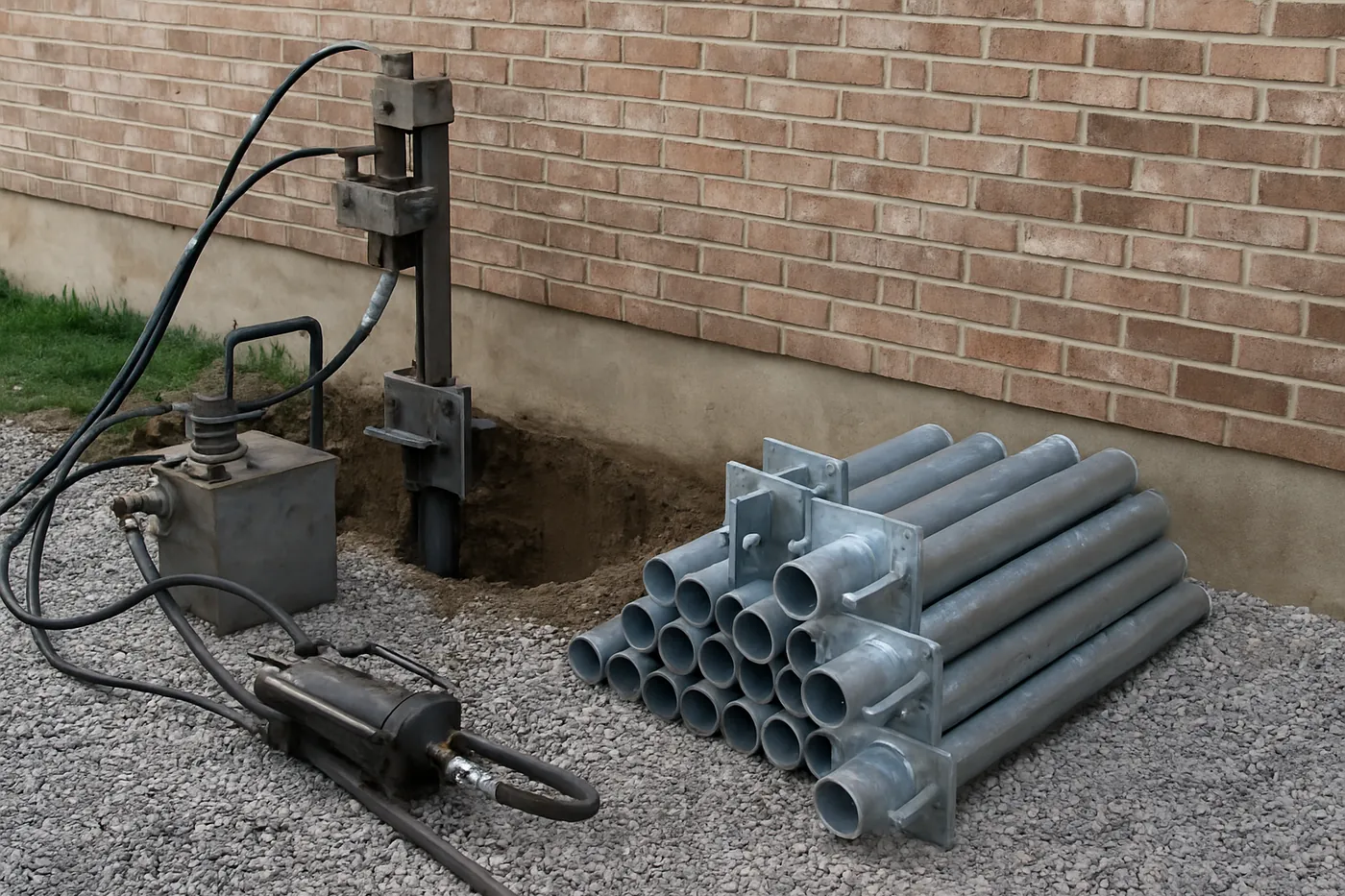
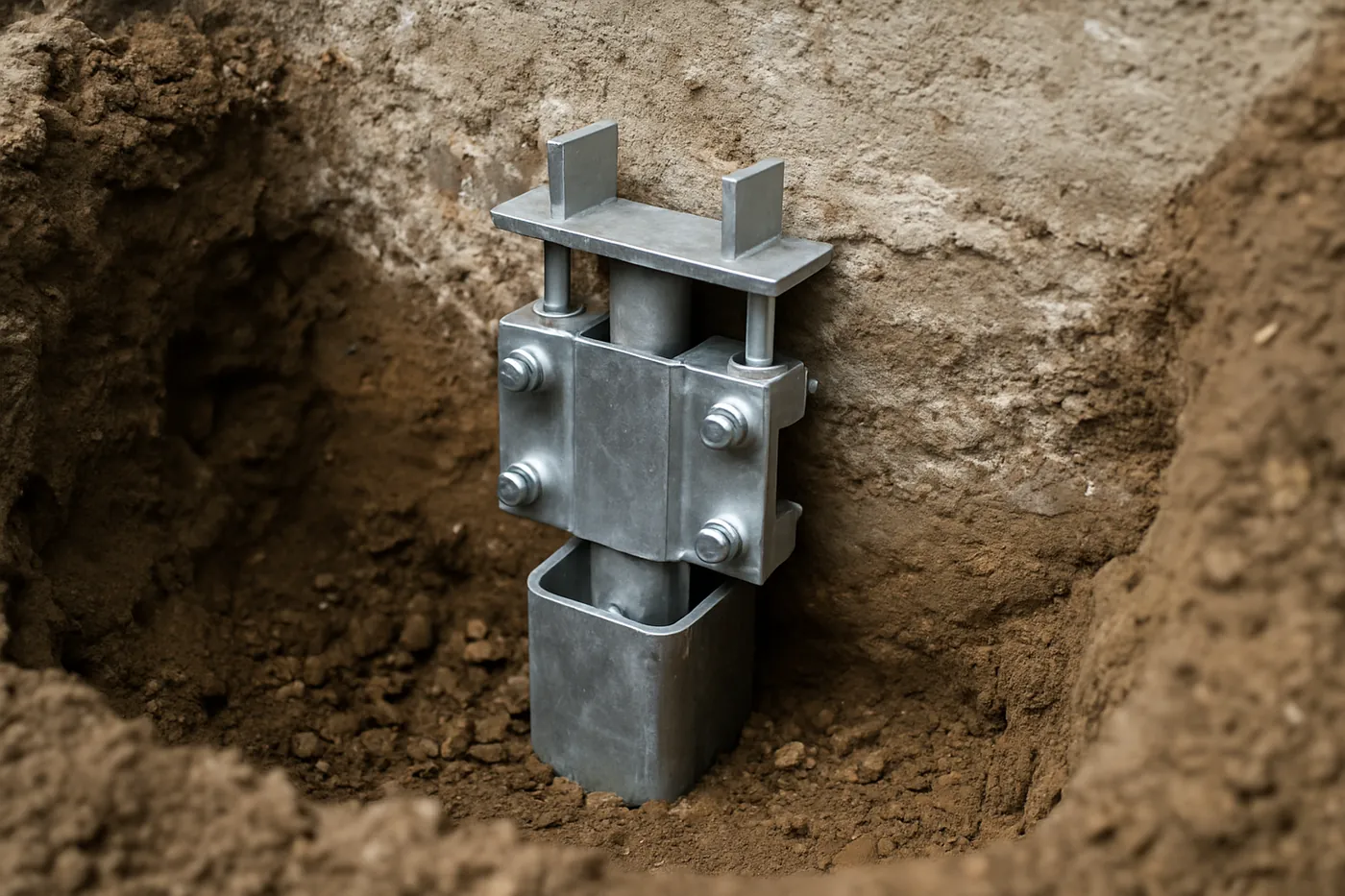
A steel pier is a column driven section by section beneath your footing until it refuses to drive further — meaning it has reached strata bearing far more than the house above it. A bracket ties footing to pier; hydraulics transfer the load; the moving clay is now scenery. Done along the settled run, the piers act as new legs for the house, indifferent to wet springs and dry Augusts alike.
| System | How it drives | Best for |
|---|---|---|
| Push piers | Hydraulically pressed to refusal using the structure's weight | Brick and masonry homes, heavier structures — most of the metro's stock |
| Helical piers | Screwed to torque-verified capacity | Lighter frames, porches, additions, new footings |
Piering inside the wider foundation repair plan
Piering is the settlement arm of foundation repair — it fixes the footing that dropped. Houses rarely fail one way at a time in this metro: the same drought that settled the corner may have left a wall bowed from the wet spring before it, and a crack field that maps both events. A piering-only bid from a piering-only company fixes the symptom it sells. Our evaluation reads the whole structure — settlement, walls, water — and sequences the foundation repair so each fix protects the others: water first when water drives it, piers before wall finishing, cosmetic repairs last, once the movement is over.
What sets the pier count
- Length of the settled run — piers space every 5–8 feet along affected footing
- Structure weight — full brick wants tighter spacing than frame
- Soil story — alluvial valley lots and karst-influenced south county lots drive deeper
- Access — interior piers through a slab cost more per unit than open-yard runs
The free evaluation maps the settlement with a laser level, counts the piers, and prices the job in writing. If the movement is old and finished — some is — the honest answer is monitoring, and that's what the report will say.
What installation day actually looks like
Piering sounds invasive; done right, it's surgical. The crew excavates a working pit at each marked location — roughly three feet square, down to the footing — and bolts a steel bracket to the footing itself. Pier sections drive hydraulically through the bracket, one atop the next, until the column refuses against load-bearing strata; the gauge pressure at refusal gets recorded for every pier, because that number is the proof the pier reached something worth standing on. Lift, if the scope calls for it, happens across all piers at once, in small synchronized increments with crack widths monitored inside. Then the pits close, the soil goes back, and by the following season the lawn keeps the secret.
Two things to expect honestly: the house stays livable throughout — there's no reason to move out for piering — and interior cracks close but don't vanish. Drywall that cracked while the corner sank needs patching after the corner is caught; what the piers guarantee is that the patch holds this time.
Piering questions, straight answers
How deep do piers go in St. Louis soil?
Past the layer that moves. Piers drive through the active clay — which shrinks and swells seasonally well below the 30-inch frost depth — until they reach strata that can carry the load, commonly 15 to 25 feet in the metro and deeper in river-valley alluvium. Depth is verified by drive pressure, not guesswork.
What does piering cost here?
Figure $1,200-$3,000 per pier installed, and most settling St. Louis homes need three to eight piers along the affected run — which is how the common $4,000-$15,000 job range assembles. The measured evaluation counts the piers before anyone talks money.
Push piers or helical piers — which do I need?
Push piers use the house's own weight to drive to refusal and suit heavier masonry homes — most of the metro's brick stock. Helicals screw in and excel under lighter structures, porches, and additions. We spec whichever the load calls for; both carry the same job.
Can a settled house actually be lifted back?
Often, yes — as piers reach load-bearing strata the same equipment can lift the foundation back toward original elevation, closing cracks and squaring door frames as it rises. Where finishes limit a full lift, we stabilize at current position. The scope states the goal in writing first.
Does pier work wreck the yard?
It's surgery, not excavation. Each pier needs a working pit about three feet square at the footing; landscaping near the run gets moved and replaced. Interior piers through a basement slab are patched flush. Most jobs read as bad weekend gardening within a month.
Get a free St. Louis foundation evaluation
Tell us what the house is doing — cracks, bowing, sticking doors, sloping floors — and we'll schedule an evaluation with photos and crack measurements. We reply the same business day.