
Oakville homeowners usually see structural foundation prices between $3,800 and $12,500, with small crack repairs from about $400. St. Louis Foundation Co. passes each Oakville request to one independent local specialist. Ask for laser floor readings and logged crack widths, and get the price in writing first.

What karst means under a subdivision
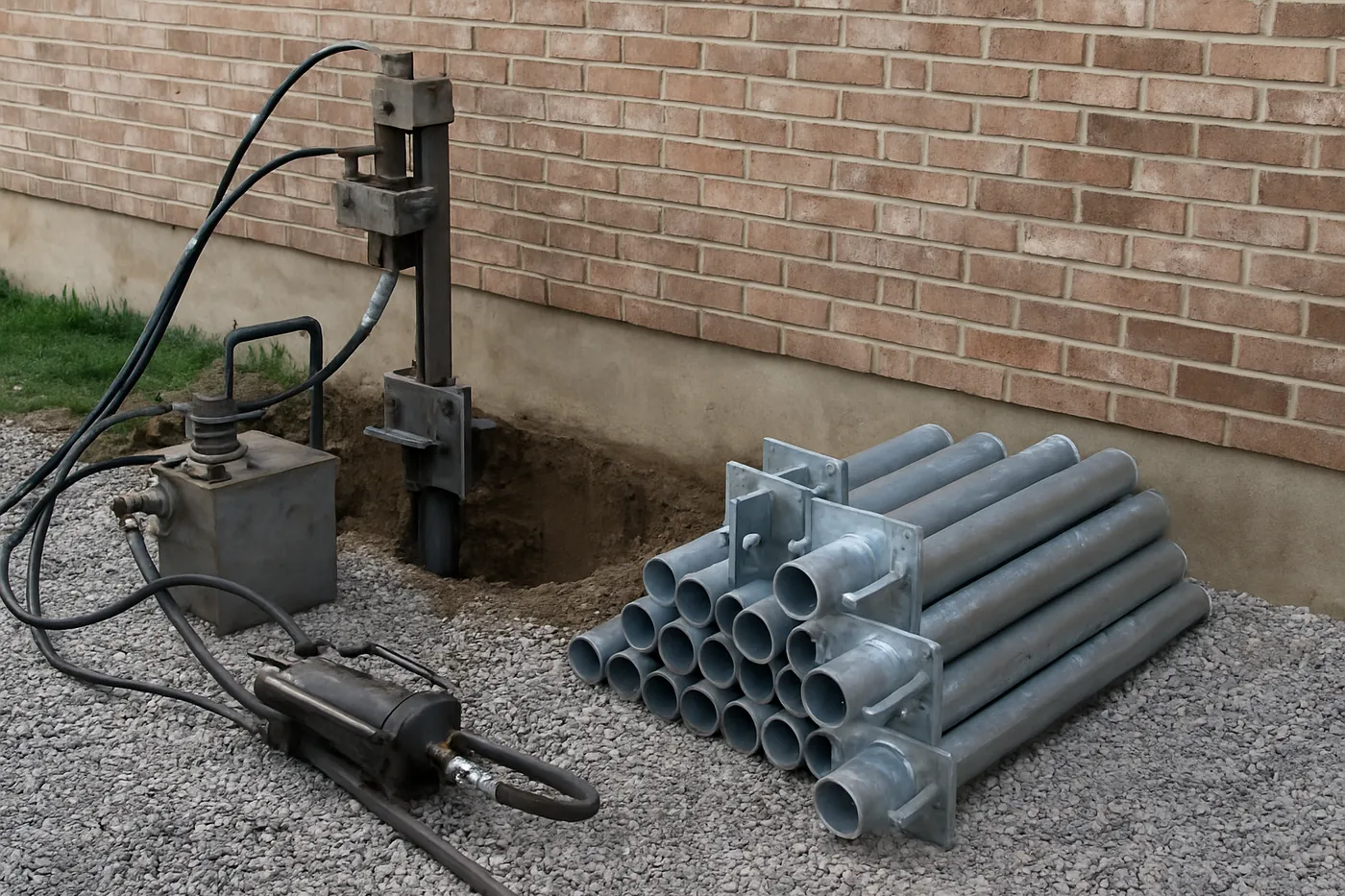
Oakville and the Mississippi-bluff side of south county sit over soluble limestone: karst terrain, the same geology that pockets this corner of the metro with mapped sinkholes and losing streams. For most homeowners it stays theoretical. For some, groundwater moving through rock finds a new path after a wet decade, carries fines out of the soil above, and a footing corner starts down. Karst settlement moves faster than clay settlement and answers to deeper piers: driven to rock refusal, not just past the topsoil's mood swings.
South county due diligence
Not every Oakville crack is karst: the same shrink-swell clay as the rest of the metro does most of the routine damage, and 1970s-90s subdivision houses show the usual veneer cracks and poured-wall leaks. A good evaluation treats the difference seriously: settlement patterns that don't match the clay story get flagged, pier depths get spec'd for what's actually below, and a lot near mapped karst features gets named plainly. It's your largest asset on the county's most interesting geology; the paperwork should read like someone noticed.
Oakville's 1970s and 1980s subdivisions
The Census Bureau's 2020-2024 survey counts about 14,200 homes in Oakville, and more than half were built in the 1970s (29%) and 1980s (25%). The median year built is 1982, and about 86% of homes are owner-occupied. Most Oakville basements are therefore poured or block walls now forty to fifty years old.
Unincorporated, so permits are county business
Oakville is a census-designated place rather than a city, so it has no municipal building department. Residential permits for the area are handled by St. Louis County's Transportation and Public Works department, which lists its Residential Building office on Central Avenue in Clayton. Ask whether a pier or brace job needs a county permit before it is scheduled.
Asked in Oakville
How do I know if settlement is karst or clay?
Speed and pattern. Clay settlement is seasonal and slow: worse in drought, partially recovering wet years. Karst-influenced settlement trends one direction and can accelerate, often localized to one corner or run. Oakville evaluations treat sudden or accelerating movement as a flag for deeper investigation and rock-depth piers.
Do I have to disclose repairs near a mapped sinkhole when selling?
Missouri disclosure runs on known material defects, and a documented, warrantied repair is the strongest position to disclose from. Ask for the full paperwork trail: cause, fix, warranty. Unexplained movement is what kills deals, not solved problems.
The next step for an Oakville house
Date each crack with a pencil mark at its tips now, so any spread is obvious at the next look. Then request an evaluation, and ask the specialist whether a written report is included. Neighboring areas sit under service areas, and typical prices are set out in the cost guide.
Get a St. Louis foundation evaluation
Tell us what the house is doing (cracks, bowing, sticking doors, sloping floors) so the evaluation starts from what you have seen. A specialist who serves the St. Louis area will call you back.